Nalqevia
Arc Module
Arc Module
Couldn't load pickup availability
-
Problem Statement
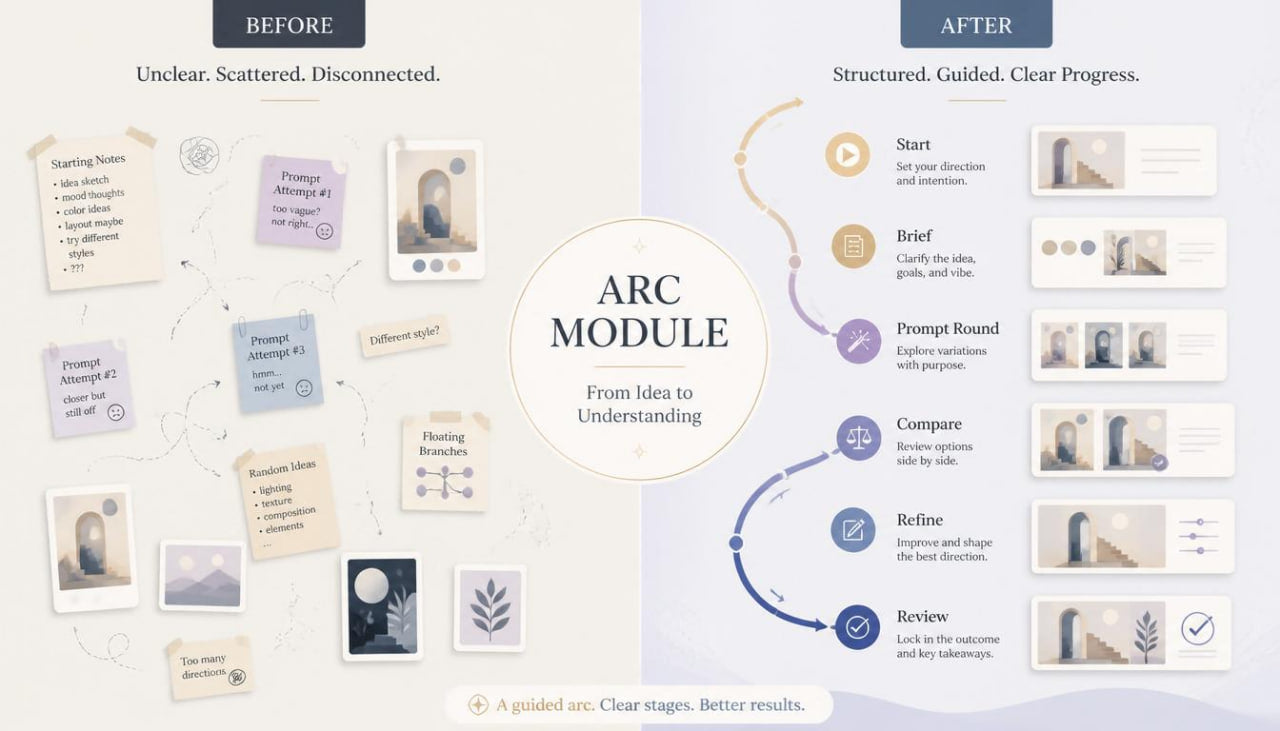
Design ideas rarely appear fully formed from the beginning. A learner may start with a mood, a shape, a material, or a small visual reference, but the path from that first idea to a complete design study can feel unclear. AI-assisted work can add more uncertainty when each new output shifts the direction in a different way. Without a clear arc, the learner may collect many visuals without understanding how they connect or where the study should move next. Arc Module was created for designers who want to guide creative movement through a structured course process. -
Solution
Arc Module introduces a clear method for shaping a design idea through several connected stages. The course helps learners plan the beginning, middle, and final review of an AI-assisted creative study. Learners explore how to write prompts that move gradually, how to compare visual stages, and how to keep each round connected to the original concept. The course also teaches how to document creative decisions so the full design path becomes easier to read. Each module supports a thoughtful workflow where visual change is guided by design intention. -
What’s Inside
Arc Module begins with a section called “The Shape of a Creative Path.” This opening module explains how a design study can be planned as a sequence rather than a pile of separate outputs. Learners study how an idea can begin with a simple theme, move through visual exploration, and arrive at a selected direction for review.
The next module focuses on starting points. Learners study how to define the first creative note for a project. This note may include subject, mood, visual tone, color direction, layout style, texture, light, and intended use. The course shows how a clear starting point gives the full study more order.
A dedicated section explores creative arcs. Learners study how to move from one stage to another with small changes in prompt wording. The first stage may explore the core concept. The second may refine composition. The third may adjust material and light. The fourth may review mood consistency. This staged approach helps learners understand visual movement without losing the main idea.
Arc Module also includes a prompt round planner. This material gives learners a way to map several prompt attempts before creating visuals. Each round has a purpose, such as concept testing, layout study, material refinement, color review, or final comparison. This helps learners avoid writing prompts without direction.
Another section focuses on transition language. Learners study how to write prompts that gently shift a visual idea from one state to another. For example, a concept may move from abstract to object-based, from dark to softly lit, from dense to spacious, or from flat to layered. The course explains how these shifts can be written with design clarity.
The course includes a visual sequencing module. Learners study how to arrange outputs in a meaningful order, so the design path can be reviewed as a story of decisions. This may include early rough directions, refined variations, rejected branches, and selected final studies. The goal is to make the creative process readable.
Arc Module also includes a comparison worksheet called “From First Note to Final Review.” Learners record the first concept note, each prompt round, the visual result, what changed, and what should be adjusted. This worksheet helps learners understand how their creative choices shaped the study over time.
A separate module covers idea branching. Learners study how one concept can split into several related directions while still belonging to the same creative arc. One branch may focus on color, another on layout, and another on material detail. Learners practice comparing branches and choosing which one deserves further study.
Another part of the course focuses on visual tension and resolution. Learners study how contrast, scale, spacing, shadow, and composition can create movement inside a design. The module explains how a visual can feel active, quiet, balanced, or unresolved depending on the relationship between its elements.
Arc Module includes a section on editing the path. Learners study how to remove weak directions, merge useful ideas, and keep only the materials that support the concept. This is an important part of the course because creative growth often requires selection, not only generation.
The course also includes a module on final review notes. Learners study how to write a clear summary of the full creative arc. This summary may describe the first idea, the key visual changes, the selected direction, and the reason certain choices were kept. The goal is to help learners explain their design study in simple, thoughtful language.
Arc Module closes with a guided arc project. Learners choose one fictional design theme and move through the full process: starting note, prompt round planner, visual sequencing, branch comparison, refinement notes, and final review. This project connects every course section into one complete learning flow.
-
Who Is This For?
Arc Module is for designers who want to understand how ideas evolve through AI-assisted creative study. It is suitable for brand designers, visual learners, art direction students, concept creators, digital design researchers, and anyone who wants to organize creative movement with more care.
This course is also useful for learners who often create many visuals but feel unsure how to connect them into one design path. Arc Module helps them study sequence, transition, comparison, and selection. It is made for people who want their creative process to feel structured, readable, and guided by design judgment.
- What You’ll Learn
- How to plan a creative path from first note to final review
- How to write a starting concept note for AI-assisted design study
- How to build prompt rounds with a clear purpose
- How to move a visual idea through gradual changes
- How to describe transitions in light, material, color, and layout
- How to organize outputs into a readable sequence
- How to compare branches inside one creative arc
- How to identify which directions support the original concept
- How to remove visual noise from a design study
- How to write final review notes for a completed course exercise
- How to document the movement of a design idea over time
- How to complete a guided visual arc project from concept to review
-
30-Day Refund Note
Arc Module follows Nalqevia’s 30-day refund policy. If the course does not match the learner’s study needs, a refund request may be sent through the contact page within 30 days of purchase. The request should include order details and a short note about the reason for the request. Our team reviews each request according to the store terms and replies with the next steps.
Self-paced learning overview
- 🗂️ Digital file available after purchase
- ♾️ Long-term availability
- 🔐 Secure checkout
- 🗓️ Content updated in 2026
Do I need prior AI knowledge?
Do I need prior AI knowledge?
No prior AI knowledge is required. The materials are written with clear explanations, guided modules, and practical tasks so learners can move through the course with a calm study flow.
What do the courses include?
What do the courses include?
Each course may include modules, written materials, guided exercises, visual examples, creative prompts, and practice tasks shaped around design workflows.
Who are these courses created for?
Who are these courses created for?
They are created for designers, creative learners, brand-minded creators, visual thinkers, and anyone interested in studying how AI can support design research, concept building, and creative direction.
Share